
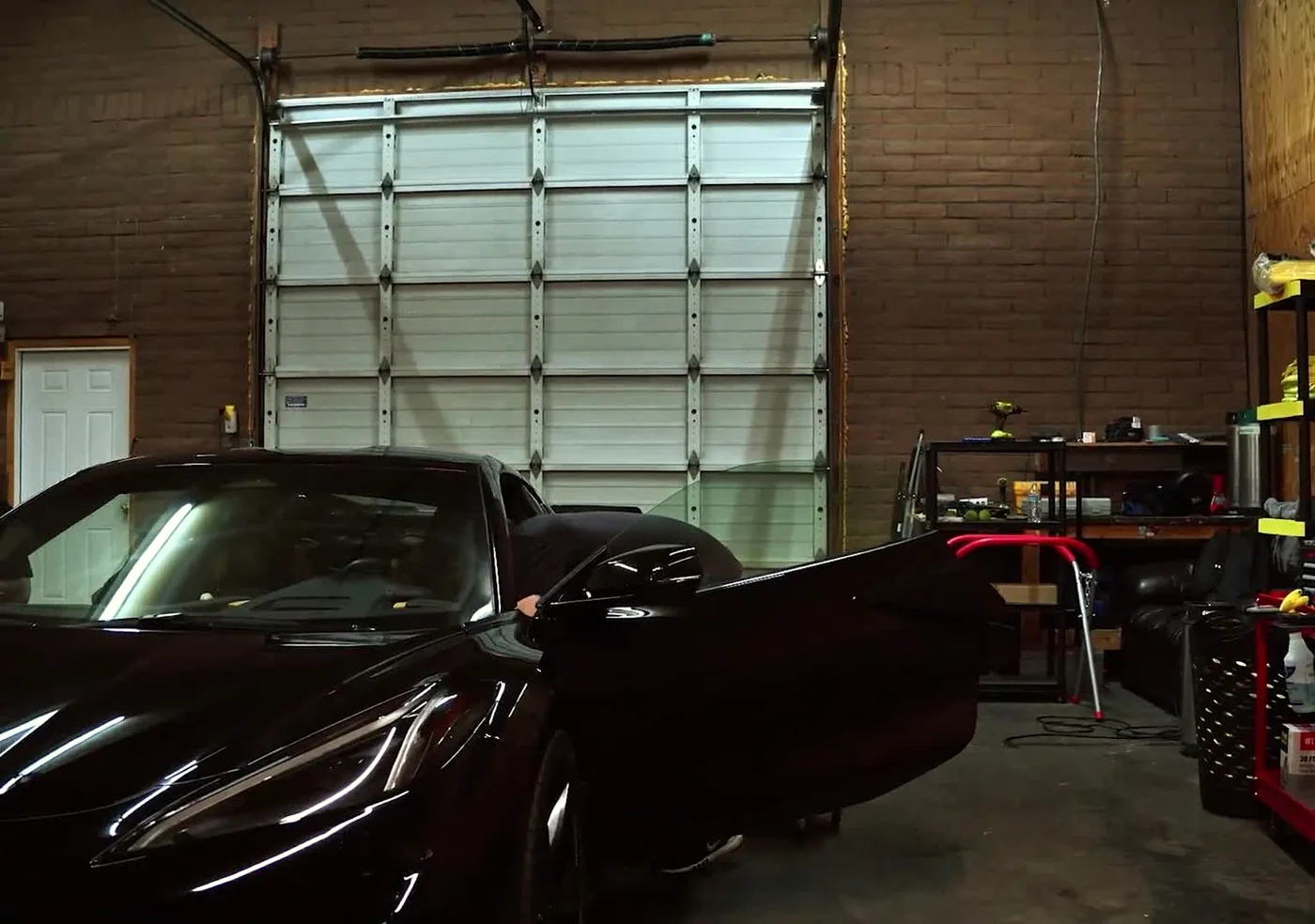
Tesla glass is its own job.
Model 3 and Model Y have more glass than almost anything else on the road, and the back window is a single curved pane the size of a windshield. That's why they get their own pricing. Full car from $279.
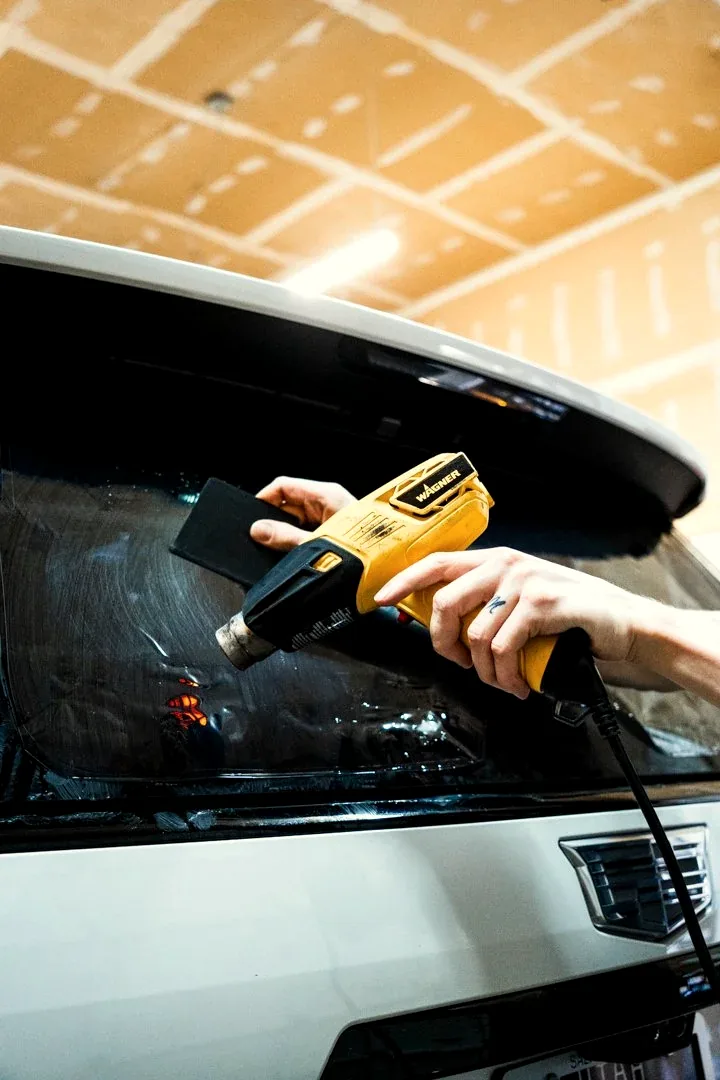
One enormous pane.
On most cars the back window is a modest piece of glass with a boot lid under it. On a Model 3 and a Model Y it runs from the parcel shelf up and over into the roofline in one continuous sweep — curved in two directions, bigger than some windshields, and with nothing to break it up.
Flat film does not want to lie on a shape like that. It has to be shaped with heat until it goes down without a crease anywhere, and there is no seam to hide behind if it doesn't. That's a genuinely different job from a set of door windows, and it's the reason Teslas have their own line in the price book instead of being lumped in with sedans.
- Back glass is one big curved pane, not a flat rectangle
- A glass roof overhead on top of that — more sun than any other panel
- Patterns cut by computer for the exact model, never trimmed on the car
- No metal in any of our films, so nothing touches signal or sensors
- Same lifetime XPEL warranty as every other car we do
Model 3 and Model Y.
Film and labour included. Full-car pricing below covers partial back glass; taking that pane end to end is the separate line underneath, because it's a far bigger piece of film and a much longer afternoon.
| Package | Color Stable | Hybrid Ceramic | Nano Ceramic |
|---|---|---|---|
| Full car, partial back glass Most booked | $279 | $379 | $529 |
| Full back glass, end to end | — | — | $928 |
| Front two windows | $129 | $159 | $199 |
| Windshield only | $199 | $249 | $349 |
Glass roof, panoramic roof, sun strip and old-film removal are quoted on request — they depend on the car and the pattern. The two ceramic films are compared side by side on the ceramic tint page, and the rest of the price book is on the automotive tint page.
Heat comes down, too.
A glass roof is lovely in April and a greenhouse in July. It's the panel with the most sun on it for the most hours, and it's directly over your head. All of these are quoted on request.
Utah sets the front two windows at 43% of light through or more. Behind the driver you can go as dark as you like, which is why most Teslas leave here light up front and dark in the back.
More glass, more reason to go ceramic.
On a car with this much glass overhead and behind you, the film choice matters more than it does on a hatchback with small windows and a metal roof.
- Color Stable — deep black, never purples, 99% UV. The value pick if heat isn't the complaint.
- Hybrid Ceramic — up to 60% of the heat you feel, no mirror look. Landon's pick, and the one most people leave in.
- Nano Ceramic — up to 88% of the heat you feel. Worth it if the car parks outside or the interior is black.
None of the three has metal in it, so phone signal, keyless entry and every camera and sensor on the car behave exactly as they did before. All three block 99% of UV and all three carry the lifetime warranty. The only thing you're really choosing is how much of August you'd like to keep outside.
Not sure? Text us the model and how the car is parked overnight and you'll get a straight recommendation, not an upsell. Interior protection is worth a thought too — paint protection film for the front end and ceramic coating over the paint can go on the same quote.
Model 3 & Model Y.
What does a Tesla cost to tint?
What does “partial back glass” mean?
Can you tint the glass roof?
Will tint affect the cameras or sensors?
Can you do the windshield as well?
Live generously.
All that glass is why you bought it. Let’s keep the view and lose the heat — 5804 Harrison Blvd, Ogden.
Talk to Landon.
Tell us the year, make and model and you'll get a real number back, usually the same day. Calls and texts are fastest.